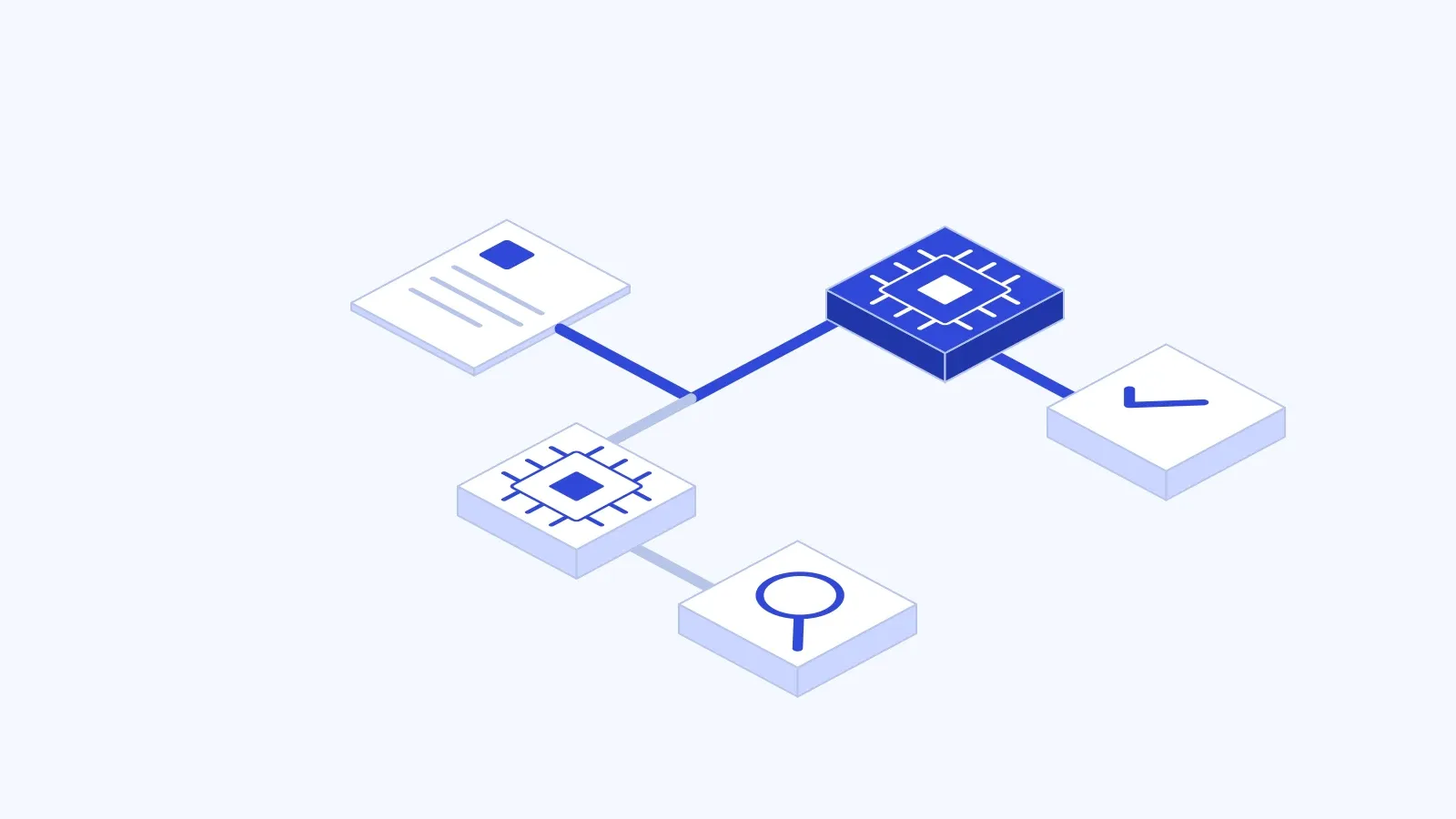
An AI application that extracts a few fields from a message has different needs from one that investigates a difficult support case. Sending both tasks to the same model is a reasonable starting point. As the workload grows, it becomes useful to ask whether each request needs the same capabilities and expense.
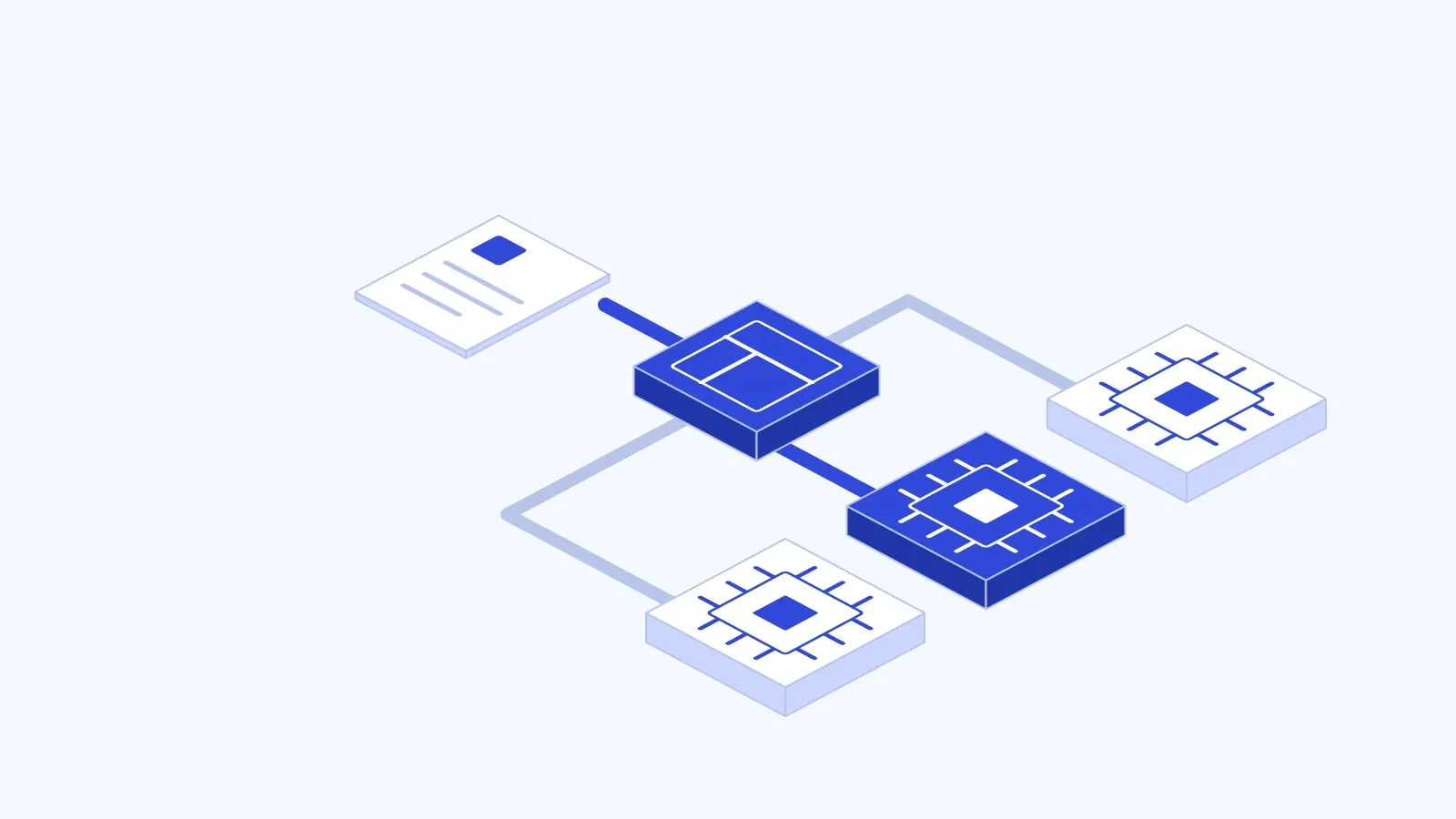
AI model routing chooses a model for a request from an approved set. The choice can use explicit rules, a classifier or a learned router. The application still needs a clear contract for the response and a way to handle failures. Routing adds a decision to that system, and that decision needs testing of its own.
Start With Eligibility
Before comparing models, decide which ones are allowed to receive the request. A model that cannot accept the input type, use the required tool or meet the application's data restrictions should never enter the selection pool.
Imagine a hypothetical support application with two tasks. One assigns a message to a known product category. The other investigates an account problem using an authorised internal tool. A model that performs the first task well may be unsuitable for the second because its tool behaviour has not been tested.
Make those requirements explicit. Keep a small registry of approved models and the tasks each has passed. Apply access and data rules before passing the request to any model, including a model used to classify the request for routing. A router should not become an overlooked destination for information the selected model was forbidden to receive.

Filter by permissions and capabilities before choosing among the eligible models. A cheaper or faster option cannot override an access rule.
Choose A Routing Method You Can Explain
For a first implementation, a rule can be easier to operate than a learned decision. A product might send a known extraction task to one tested model and a document investigation to another. The application already knows the task type, so another model call may add little value.
A classifier becomes more useful when the task arrives as open-ended language. It can predict a category, but that prediction can be wrong. Define what happens when a message fits several categories or none. A conservative default may be appropriate for an ambiguous request, provided that default still meets the same access requirements.
Learned routing is another approach. RouteLLM explores routing between stronger and weaker models using preference data. Its reported benchmark results establish evidence for that evaluated setup. They do not establish the savings or accuracy of a different business workload.
Keep the first version narrow enough that a reviewer can inspect why a request took a particular route. Record the routing policy version and selected model without retaining sensitive message text by default.
Compare Against A Fixed-Model Baseline
Build a representative evaluation set before changing production traffic. Include routine cases, ambiguous requests and failures that would matter to a user. Run the same tasks through the existing fixed-model approach and the proposed routing policy.
Judge the completed task. For classification, that might mean the correct category and an appropriate response when the source is unclear. For a tool-using investigation, check the actions as well as the written explanation. A fluent answer does not establish that the correct account was queried.
Measure the whole path. Include routing time, model calls, retries and any review needed to finish the task. A lower price for the first call can be outweighed by repeated attempts. Likewise, average response time can hide an unacceptable delay on the requests that take the longest.

Use the same test cases for both paths. Compare task quality, total cost and end-to-end time rather than the advertised price of an individual model call.
Our AI agent evaluation guide covers how to define outcomes and permitted actions. For routing, add one more question: did the selection policy send each case to an appropriate model?
Separate Escalation From Retrying
A routing decision happens before a model attempts a task. Escalation happens after the system has evidence that the first attempt is insufficient. Decide which evidence justifies that extra call. A missing required field or failed validation is easier to act on than an unsupported confidence score.
Set a limit on attempts. When the limit is reached, return a useful failure state or send the case for review. Repeatedly asking increasingly expensive models can turn a bounded request into an unpredictable workflow.
Take particular care when the first attempt can change external state. If a tool call creates a ticket and the response later fails validation, rerunning the entire task could create a duplicate. Keep side effects behind server checks, track what already happened and use idempotency where the receiving system supports it. Changing models should never expand the action's permissions.
Keep The Output Contract Stable
Downstream software should receive a consistent record whichever model is selected. Agree the required fields, missing-value behaviour and failure states before adding routes. Our guide to structured outputs explains why predictable formatting still needs source checks and business validation.
Use the same acceptance rules across eligible routes. If one path silently drops an uncertain field while another invents a value, the application has two different behaviours hidden behind one interface. Test those differences directly.
Roll Out One Decision At A Time
A sensible pilot covers one workload with a known baseline and a reversible routing policy. Sample the decisions for review, track failures by route and keep a way to return traffic to the tested baseline.
Re-evaluate when a model, prompt, tool or policy changes. Those changes can affect both which route is suitable and whether the task still succeeds. Keep enough version information to distinguish a routing regression from a change in the underlying model.
For a team considering AI integration, the useful first question is which request types have genuinely different requirements. If every task needs the same capabilities and the current model meets the target, a router may add operating work without a worthwhile benefit.