
An AI agent can only act through the interfaces an application gives it. A tool that finds an order, for example, defines what information the agent supplies, what the application checks and what comes back. A confusing or overly broad tool makes an otherwise straightforward task harder to perform reliably.
Good tool design starts with a specific job. It also keeps authority in the application: a description can help a model choose an operation, but the system must validate the request and enforce access when that operation runs.
Give Each Tool A Clear Job
Consider a hypothetical support assistant asked whether an order has shipped. A find order tool might accept an order identifier and return the authorized order's current status. A single broad tool that can search every customer, change an order and issue a refund mixes decisions with very different consequences.
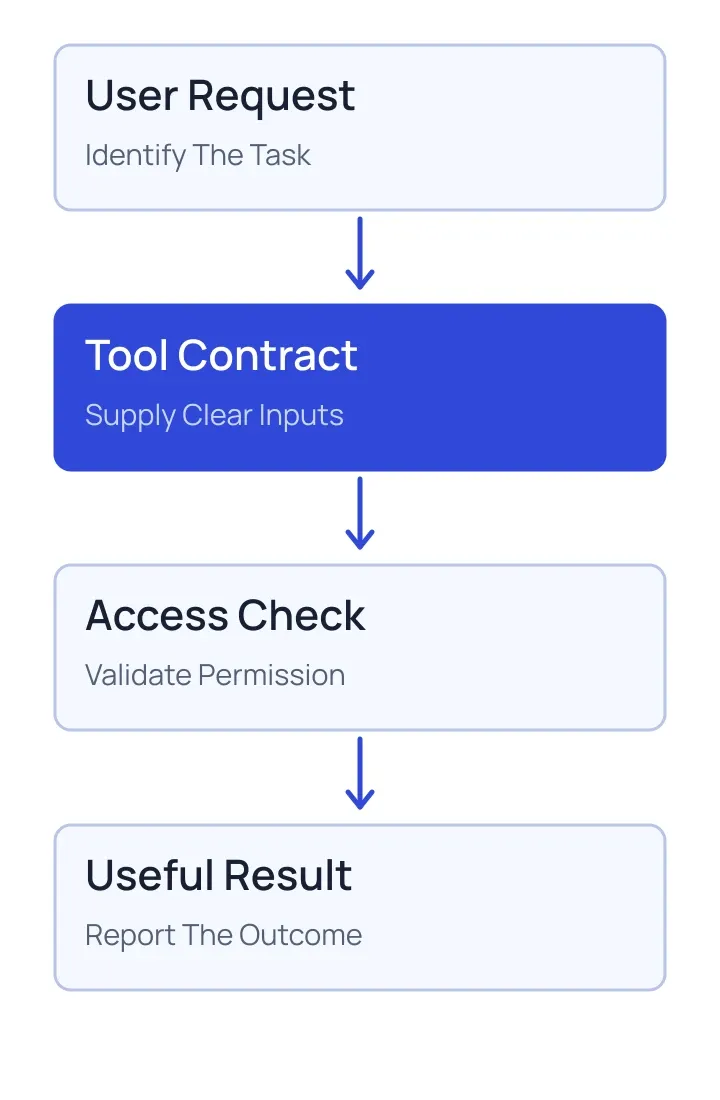
Separate read operations from actions that change data when that distinction helps make permissions and approvals clear. Name inputs for what they mean, define their expected format and say when a value is required. Avoid forcing the agent to guess between similar fields or supply a made-up value when information is missing.
A good description explains when to use the tool, what it returns and any important limits. It does not need a long prompt for every conceivable situation. If a tool requires context the user has not provided, allow the agent to request that information or stop with a clear explanation.
Validate And Authorize At The Boundary
Treat arguments generated by a model as untrusted input. Validate their shape and business meaning on the server. An order identifier can be syntactically valid while belonging to another customer. Check the signed-in user's identity, the resource being accessed and the requested operation before returning data or making a change.
Do not rely on the tool's name, a model instruction or a hidden identifier as an access control. If an agent works in the background, define its own limited permissions and how those permissions are reviewed. For more on delegated and service identities, see AI agent identity and permissions.
Consequential actions may need a separate approval. Show the reviewer what will change, which record is affected and any relevant amount or recipient. Verify the authorization again at execution time, especially after a long pause.
Return Useful Results And Errors
The result should distinguish success, not found, permission denied and a temporary service failure. Include the fields needed for the next step without returning unrelated private data. A timeout with an unknown outcome must not be described as a confirmed failure if the operation may have succeeded.
Where a write can be retried, use a stable operation identifier and the destination's supported idempotency mechanism. If the outcome is uncertain and cannot be checked safely, hand it to a person rather than risking a duplicate action. Avoid putting secrets or raw sensitive records in tool logs.
Test The Interface With Realistic Tasks
Use representative requests to check tool selection, arguments and the final outcome. Include incomplete identifiers, inaccessible records, conflicting information and a dependency that times out. Test a request the user is not allowed to perform and confirm that the system rejects it even if the model tries.
Review traces to locate repeated selection errors or ambiguous responses, then refine the interface and rerun the cases. Agent observability helps explain what happened; agent evaluations help establish whether the workflow achieved the intended result. Start small, measure actual failures and expand access only when the task requires it.