
Multi-agent AI splits a task between agents with different responsibilities, tools and working context. A coordinator can collect their findings and prepare a result for review. The useful question is whether the work separates cleanly enough to justify the extra coordination.
Consider a product idea that depends on an external integration. Someone needs to investigate competing products, check the integration requirements and challenge the assumptions behind the idea. These investigations can proceed independently, then inform the same decision. That makes them a reasonable candidate for a multi-agent workflow.
How A Multi-Agent Workflow Fits Together
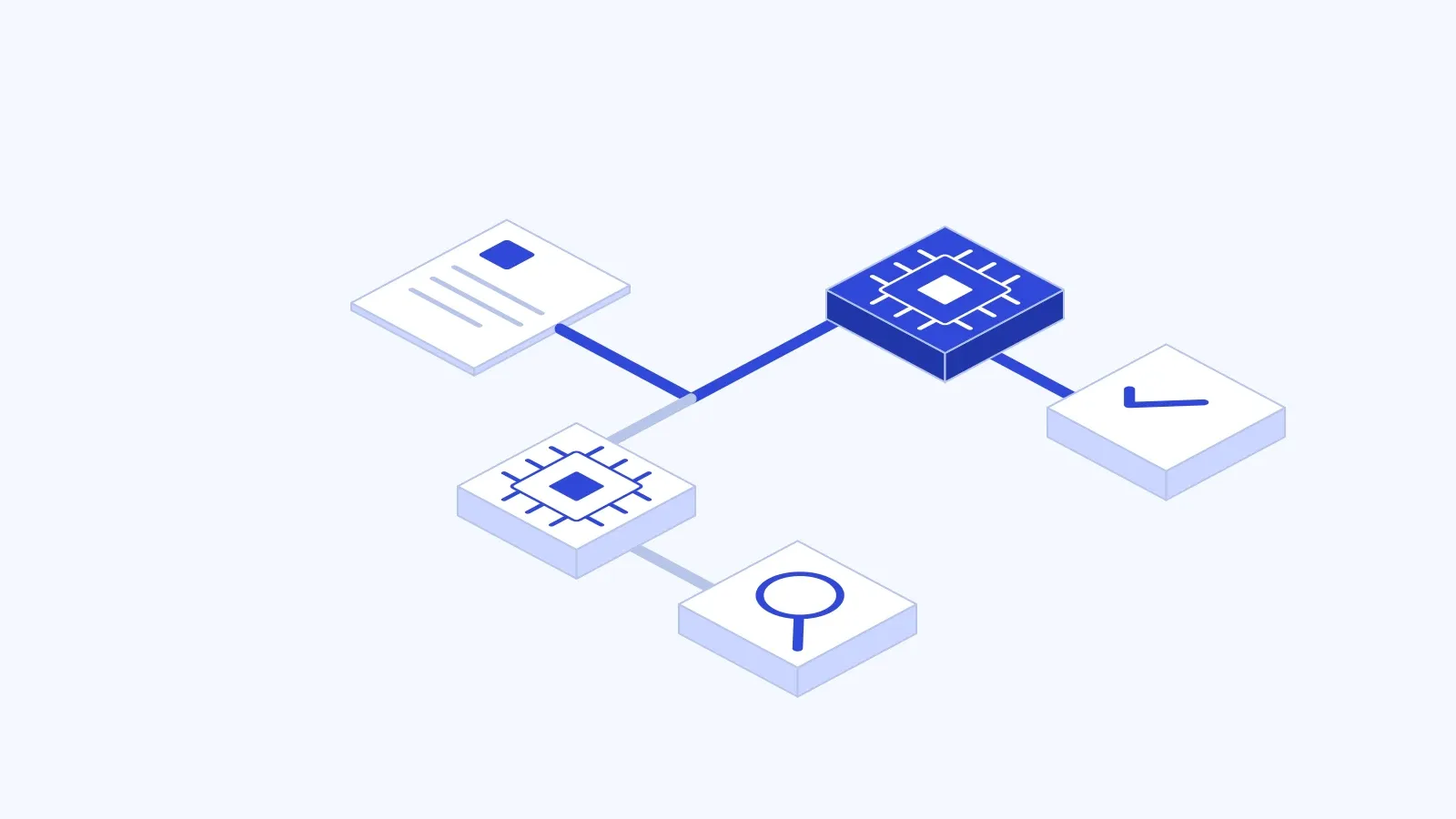
A coordinator receives the overall brief and assigns bounded investigations. Each specialist returns evidence in an agreed format. The coordinator compares the findings, identifies disagreements and explains what remains uncertain.
Keep the distinction between a finding and a decision explicit. An agent can report that an API supports a particular operation. Whether that support is sufficient for the proposed product depends on access, limits, failure behaviour and the rest of the requirements.
An agent's job title alone does little. A useful assignment specifies the question, permitted sources, expected output and stopping condition. For an integration check, ask for supported operations, authentication requirements, documented limits and unresolved dependencies, with links to the evidence. That is more useful than asking an agent to “act as an expert.”

A Practical Example For A Small Product Team
Imagine a team considering a scheduling product for field visits. This is a hypothetical planning exercise, rather than a SparkCode client result.
- A product research agent compares how existing tools handle scheduling changes and records the source behind each finding.
- A technical agent checks the proposed calendar integration, including what access is needed and how updates are delivered.
- A critical review agent looks for assumptions the team has not tested, such as reliable connectivity during a visit.
The coordinator should produce a decision brief that preserves those differences. A missing integration permission should remain an open dependency. A guess about customer demand should remain a hypothesis. Combining the reports must not make either sound established.
Before using the brief, a person should check the evidence that would change the investment decision. Multiple agents can draw on the same incomplete source and repeat the same mistake.
Using Multi-Agent AI Inside A Company
A company enquiry can require technical, account and delivery information. A technical agent could check product documentation while an account agent reads permitted customer records and a delivery agent checks known dependencies.
The output should support the person responsible for the answer. Give every investigation the same request identifier, record which checks completed and make missing information visible. A failed capacity check must not quietly become a confident launch date.
Permissions belong in the application and connected systems. A research task might need read access to selected documents. It does not need permission to send a quotation, change an account or make a delivery commitment. Keep those actions behind the appropriate review.
For the connection layer, our guide to Model Context Protocol explains how an AI application can discover and call tools. The protocol and the agent workflow solve different parts of the system.
When One Agent Is Enough
Start with a simpler approach when each step depends on the preceding result, the task needs little context or a fixed sequence of operations already works well. An extra agent adds another place for instructions, state and errors to diverge.
For a pilot, compare the current process with the proposed workflow using the same representative requests. Measure time to a reviewed answer, corrections needed, incomplete checks and total operating cost. Include the time people spend reconciling the output.
A reasonable first scope is one internal research or preparation task with a clear reviewer. Agree on what would justify expanding it before adding more agents. Our AI agent evaluation guide describes how to test the result and the actions taken along the way.
If the process crosses several business tools, SparkCode's AI integration service can help scope the access, evidence and review requirements around that particular workflow.