A system can still run the business while making every new change difficult. Replacing it all at once may seem like the cleanest answer, but a single cutover can put everyday operations, integrations and historical data at risk.
An incremental modernization moves a bounded capability at a time. The existing application continues to serve the work that has not moved, while a new component takes responsibility for a selected part. The approach creates its own complexity, so the useful question is where a safe boundary can be drawn and how the two systems will coexist.
Choose A Boundary Around A Real Capability
Start by mapping what people actually do, which systems they depend on and where changes currently cause trouble. A capability might be order tracking, customer onboarding or document approval. Follow the workflow beyond its screen: identify integrations, data ownership, reports, access rules and the people who rely on the result.
For example, a business could replace an order-tracking interface while keeping its existing invoicing process. That does not mean the two can be designed independently. Both may need an agreed order identifier, consistent status definitions and a reliable way to handle corrections.
Choose an initial slice that matters but is small enough to test and reverse. If the first change requires rewriting every shared database table, the proposed boundary may not be as independent as it looks.
Route Work Deliberately
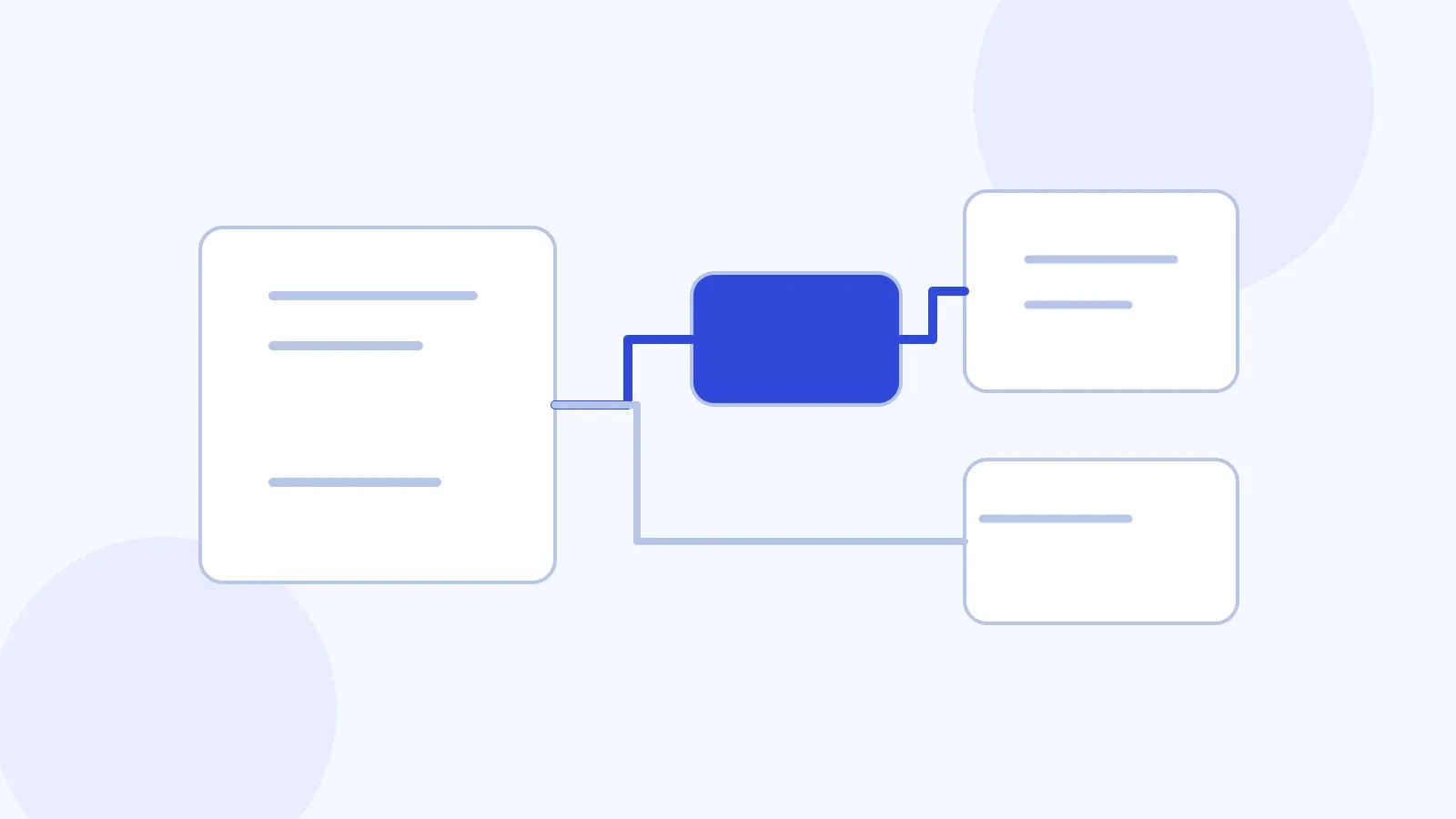
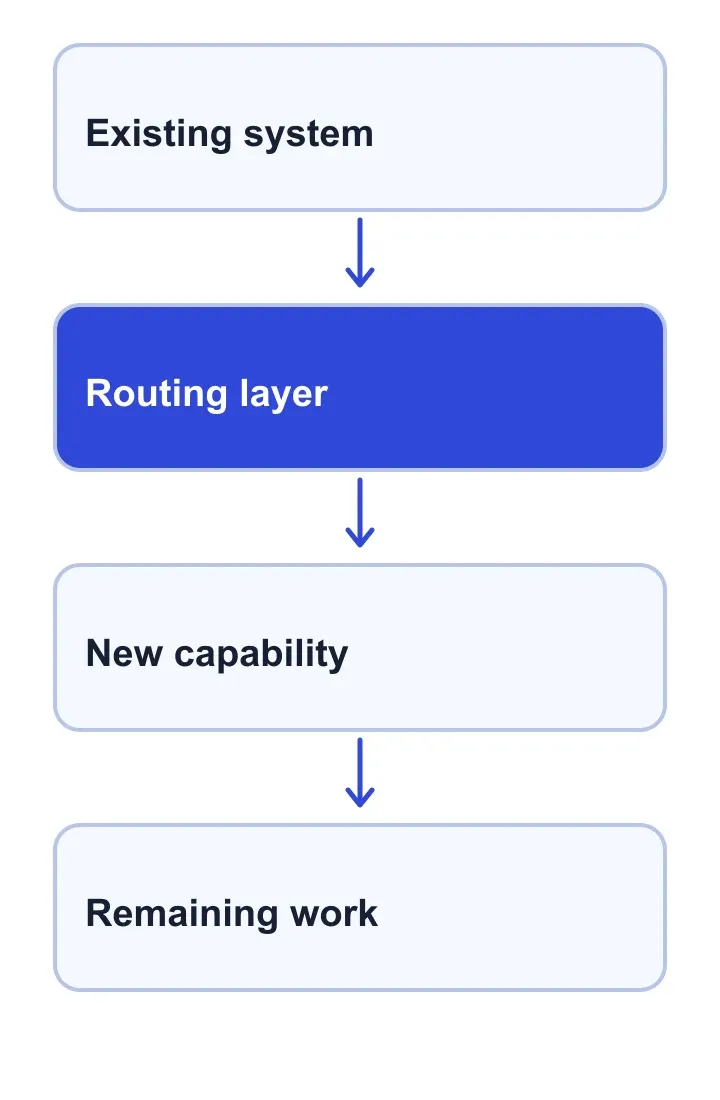
A routing layer can direct requests for the selected capability to the new component while the existing system handles the rest. This is often called the strangler fig pattern. Microsoft's architecture guidance describes the gradual replacement and the role of the façade.
Define which requests go where, who can change the route and what happens when the new component is unavailable. A fallback is useful only if the old path can still handle the request safely. For a write, sending the same operation to both systems or retrying after an uncertain response can produce duplicate changes. Establish a clear authority for each operation and make retries safe before switching traffic.
Routing is a temporary part of the migration. It needs monitoring, tests and an eventual removal plan, rather than becoming an unexplained permanent dependency.
Decide Who Owns The Data
Shared data is often the hardest part. Write down which system is authoritative for each record during each phase, how updates travel, and how long consumers may see older information. Reconcile records after synchronization and make conflicts visible to an owner who can resolve them.
Avoid assuming that a rollback is just a routing change. Once the new component has accepted updates, the old system may no longer contain the latest state. A rollback plan must account for those writes, migration checkpoints, replay and the point at which reversing the change is no longer safe.
Protect personal and operational data across both systems. Access controls, audit records, retention rules and deletion requests must continue to work throughout the transition.
Test The Transition, Not Just The New Component
Test a complete workflow across the old and new boundaries, including errors and unusual records. Compare outputs on representative data, check integrations and involve the people who perform the work. Include a failure in the routing layer, a delayed update, a duplicate request and an interrupted cutover.
Where practical, release to a limited group and monitor both technical signals and business outcomes. Agree in advance on the thresholds for continuing, pausing or rolling back. Shadow testing can help compare a candidate against a live system when actions are isolated; it cannot prove that a later migration will succeed.
Finish The Migration
Two systems running together add operating costs and create opportunities for conflicting data. After a capability has moved, verify that the old path is no longer needed, transfer ownership and remove obsolete routing and integrations deliberately. Keep the evidence and handover material the team needs to support the new capability.
Incremental modernization is not always the right fit. A tightly coupled system, strict cutover requirement or poorly understood data model can make a different approach more practical. A careful assessment of boundaries and rollback options comes before the choice of pattern.